
Is Tondo Manila Really Dangerous? A Filmmaker’s Field Notes (2026)
The first thing you notice about Tondo isn't the crime; it’s the density. Most people in Manila will tell you never to set foot here. They talk about "Happyland" and "Smokey Mountain" as if they are war zones. In 2026, while crime stats are shifting, stats don't tell you how to move through an alleyway when you’re carrying $10k in camera gear.
I went in faceless, with a local guide and a specific objective. Here is the operational reality of Tondo.
The Reputation vs. The Reality
Tondo is labeled the "most dangerous" place in the Philippines. While it has a history of gang activity, the danger for a traveler is rarely a random act of violence. It is usually a result of miscalculation.
- The Reputation: Constant muggings and "no-go" zones.
- The Reality: A hyper-vigilant community where everyone knows who doesn't belong. If you walk in like a tourist, you are a spectacle. If you walk in with a purpose, you are a guest.
The Manila "Snatch" — Why Your Phone is a Liability
In Tondo, your biggest enemy isn't a shadow in an alley; it’s your own distraction. Theft and phone snatching are the primary risks here.
- The "Tandem" Tactic: Two guys on a motorcycle—one grabs, one drives. By the time you realize your hand is empty, they are three blocks away.
- The "Hold Up": As noted in my field research, gangs in areas like Aroma and Tondo often bypass the drug trade entirely, focusing instead on high-frequency robberies of bags, jewelry, and cash.
- The Rule: If you need to check Google Maps, walk inside a store or a Jollibee. Never use your phone near the curb or a moving traffic line. Don't make yourself a target.
🎥 WATCH THE FIELD REPORT: TONDO GANGS
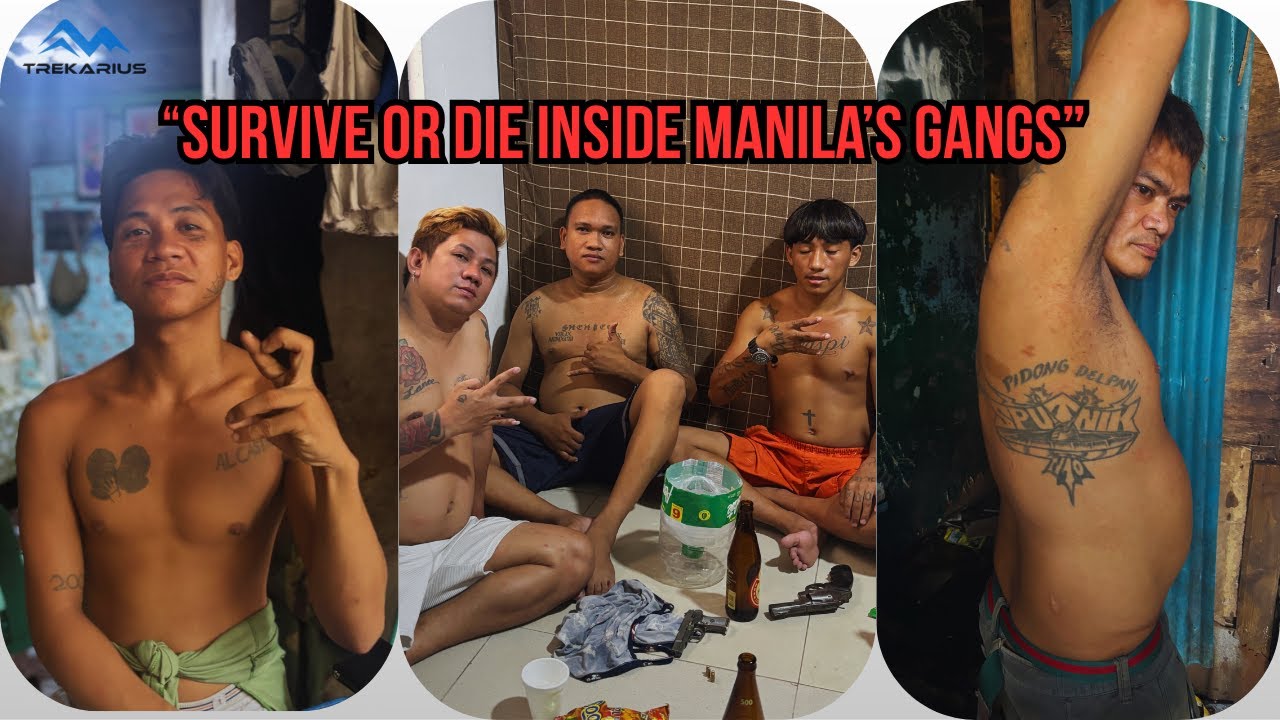
Go behind the scenes of our mission filming the "Young Brotherhood" and the reality of gang life in Manila.
The "Social License" — Don't Walk in Cold
Walking into Tondo without a contact is like walking into a stranger’s living room without knocking. It’s not just dangerous; it’s disrespectful.
- Make Contacts First: You must establish a connection before deciding to walk around a high-risk area.
- The Barangay Captain: Every district has a leader. If they don't know why you’re there, the neighborhood "eyes" will treat you as a target.
- The Pre-Trip: Spend days making contacts in a "safe" zone before you ever bring a gear-heavy bag into the "red" zone.
Gear Management: The "Low-Signature" Rule
When I’m filming in high-risk zones, I follow the Zero-Logo Rule. If your bag has a brand name everyone knows, you’ve already failed the first test of street safety.
My Setup: I don't use "camera bags." I use a specialized, non-descript shell. Inside, I carry the TREKARIUS Travel Pack 35L.
In Tondo, I keep my most vital assets—passport, emergency cash, and backup SD cards—inside a separate internal organizer tethered to my body. Even if a "snatch and run" happens and I lose the main pack, the footage—the most valuable asset—stays with me. In places like Tondo, you have to assume you might lose your bag. You just can't afford to lose your data.
Operational Safety Table (2026)
| Situation | Amateur Move | Professional Protocol |
|---|---|---|
| Navigation | Checking phone on the street. | Memorize the route or use audio cues. |
| Gear Storage | Expensive branded backpack. | Non-branded shell like the TREKARIUS 35L. |
| Access | Walking in cold to "explore." | Pre-cleared access with local contacts. |
| Documentation | Keeping passport in a pocket. | Secured in a physical backup organizer. |
Is it worth the risk?
Tondo is the soul of Manila. It is full of hardworking people and incredible stories, but it is also a place where "power" often dictates the law. If you go, go prepared. Don't make yourself a target. Make contacts first.
Ready for your next mission?
Check out the TREKARIUS 35L Travel Pack designed for high-risk, low-signature movement.
YouTube video views will be stored in your YouTube History, and your data will be stored and used by YouTube according to its Terms of Service.